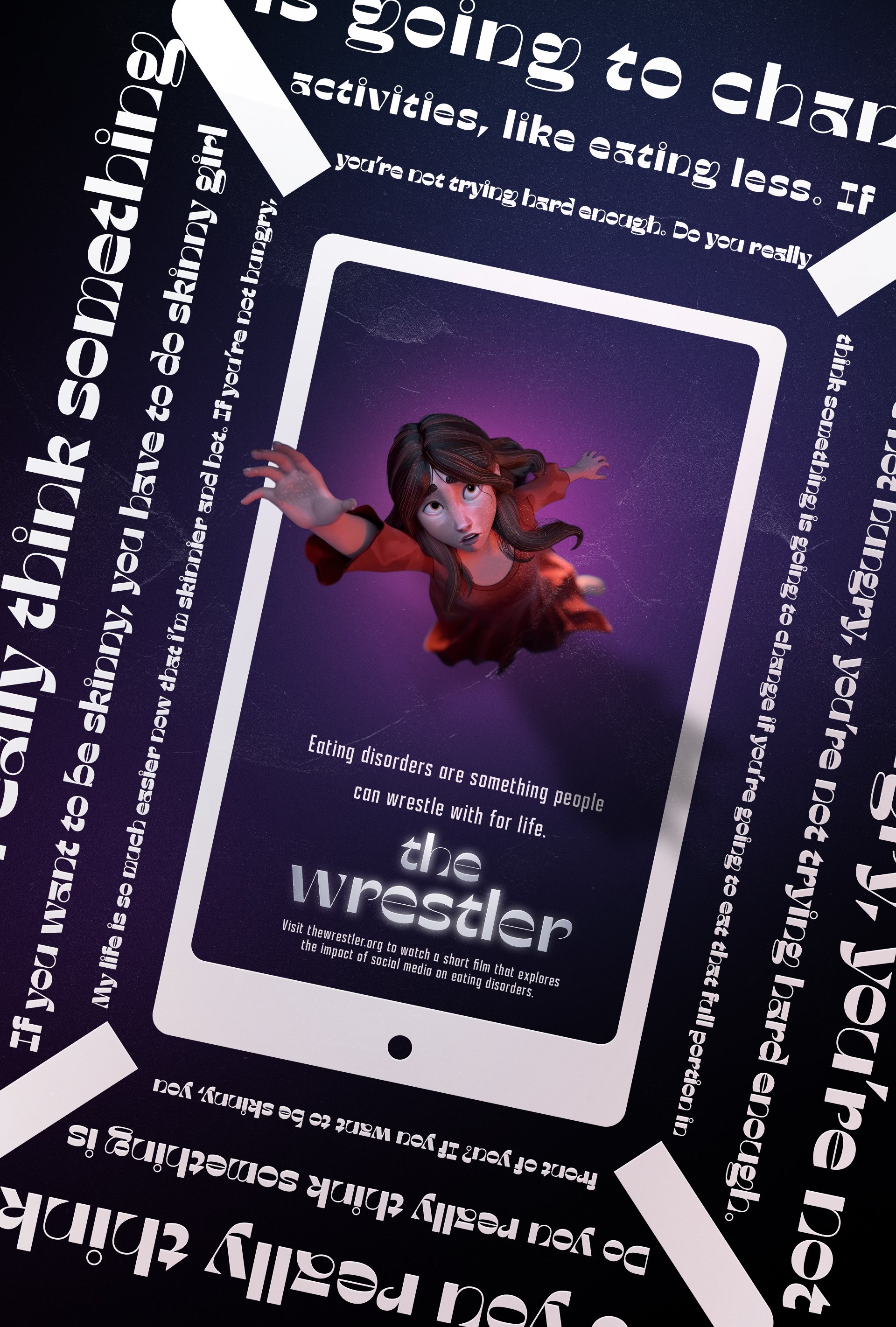
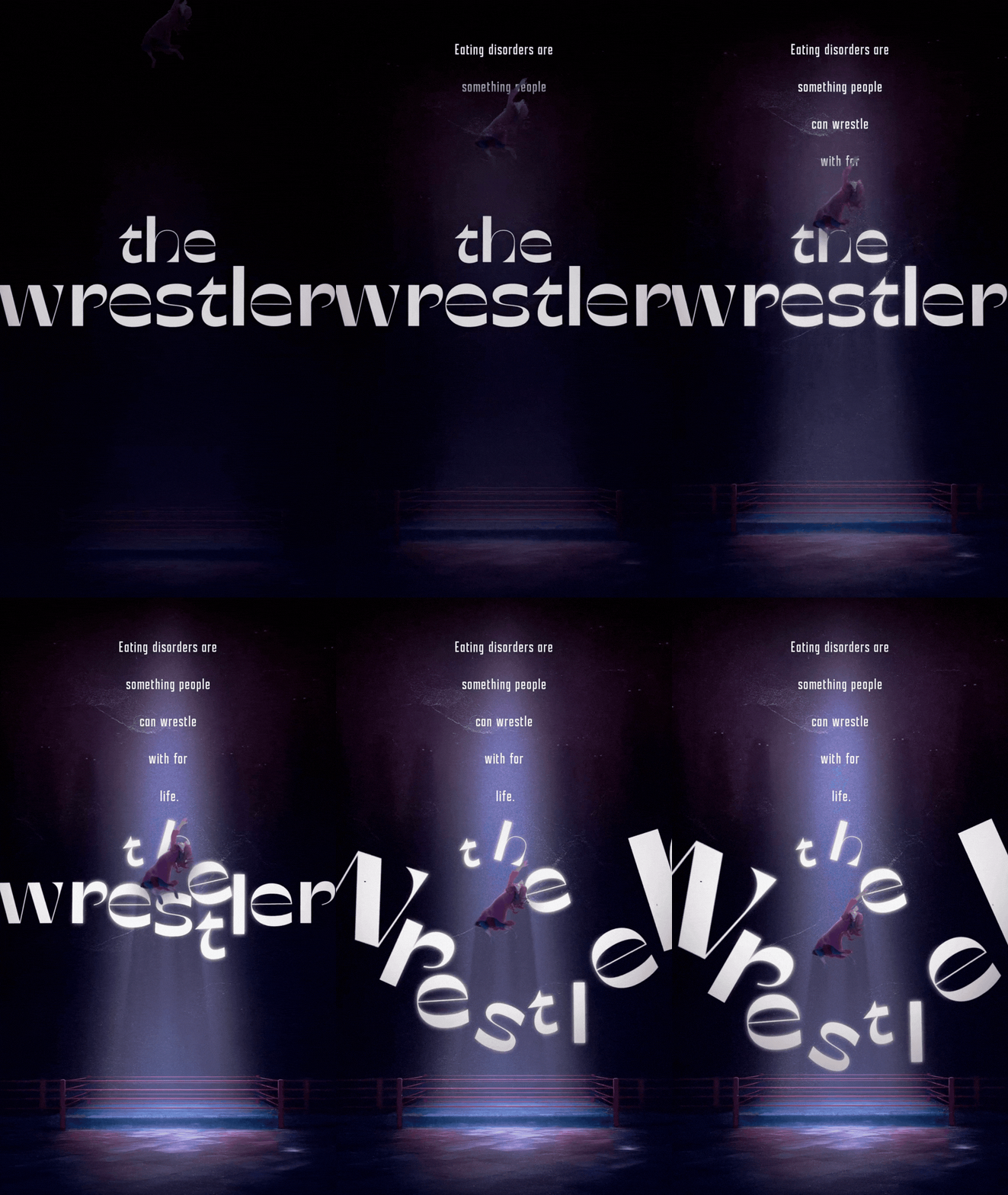
Eating disorders are something people can wrestle with for life.
the wrestler
〰️
the wrestler 〰️
Since 2018, eating disorders in children under 17 have doubled. Anorexia has the highest mortality rate of any mental illness.
Research increasingly links this rise to social media algorithms—systems designed to amplify and intensify appearance-driven content.
Children encounter up to 3,000 algorithm-driven posts every day. Over time, curated feeds become internal dialogue—until kids can no longer tell which thoughts are their own.
The real danger isn’t comparison. It’s internalization.
the crisis
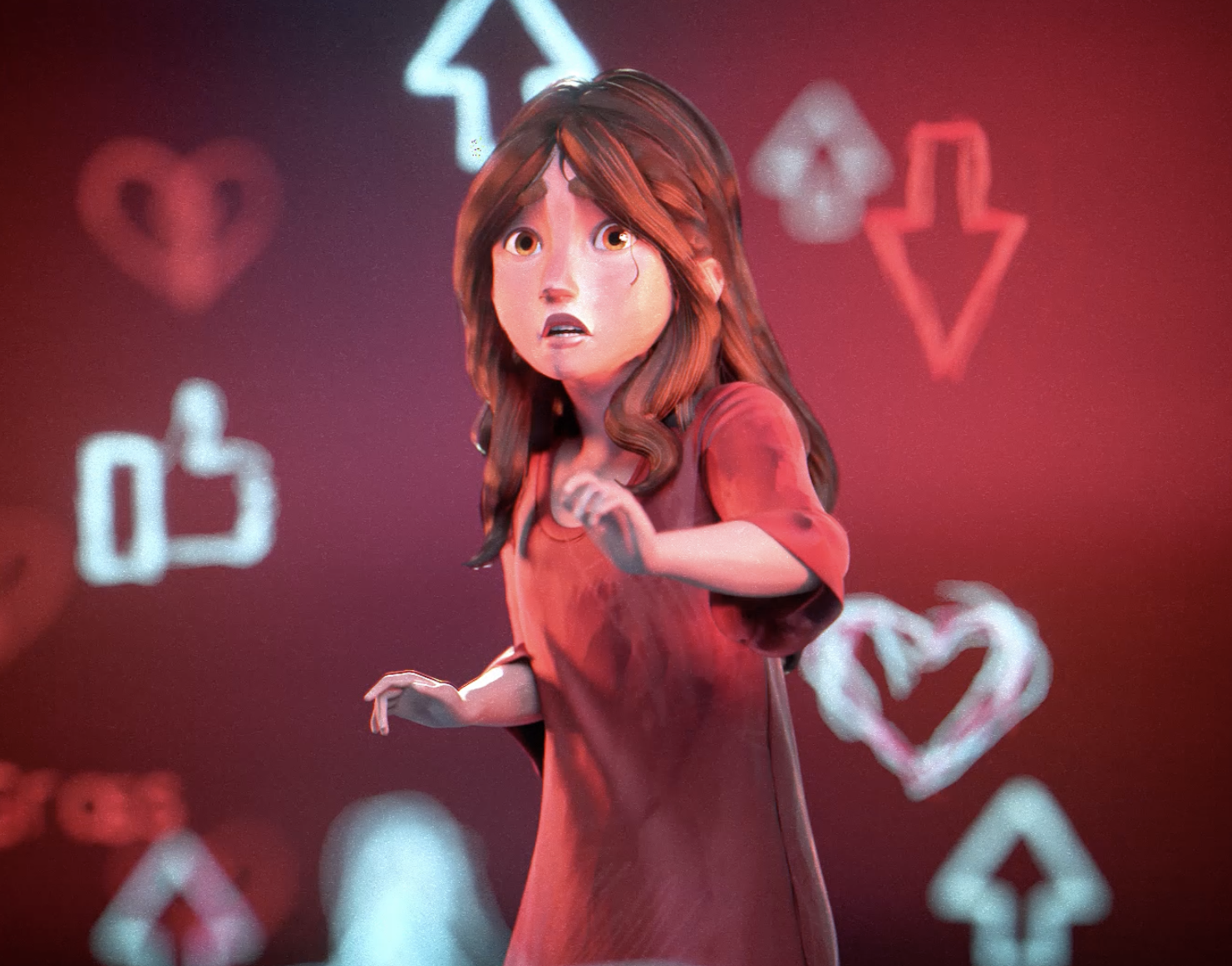
algorithms don’t just shape what kids see. they shape how they think.
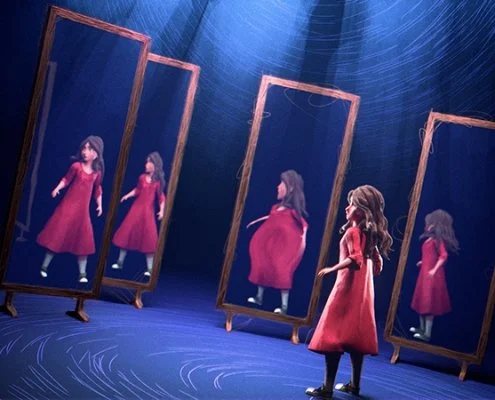
To interrupt that cycle, we needed to make the invisible visible.
In partnership with ANAD (National Association of Anorexia Nervosa & Associated Disorders), we created The Wrestler — a three-minute animated short that immerses viewers inside the internal battle shaped by algorithmic pressure.
Rather than explain eating disorders, we set out to let audiences feel what internalization sounds and looks like.
the idea
watch the film
〰️
watch the film 〰️
synopsis
In a wrestling match rigged by algorithms, a young girl faces opponents born from influencer culture, diet messaging, peer comparison, and societal expectations around body image.
Each monster echoes a distorted version of her own voice—post after post, round after round—until the source becomes indistinguishable.
Because eating disorders aren’t a single moment. They’re something you can wrestle with for life.
the cultural moment
As eating disorders continue to rise, governments are beginning to respond.
Australia banned social media access for children under 16.
Denmark approved safeguards for children under 15.
Yet harmful diet content continues to circulate — particularly on platforms where young users are most active.
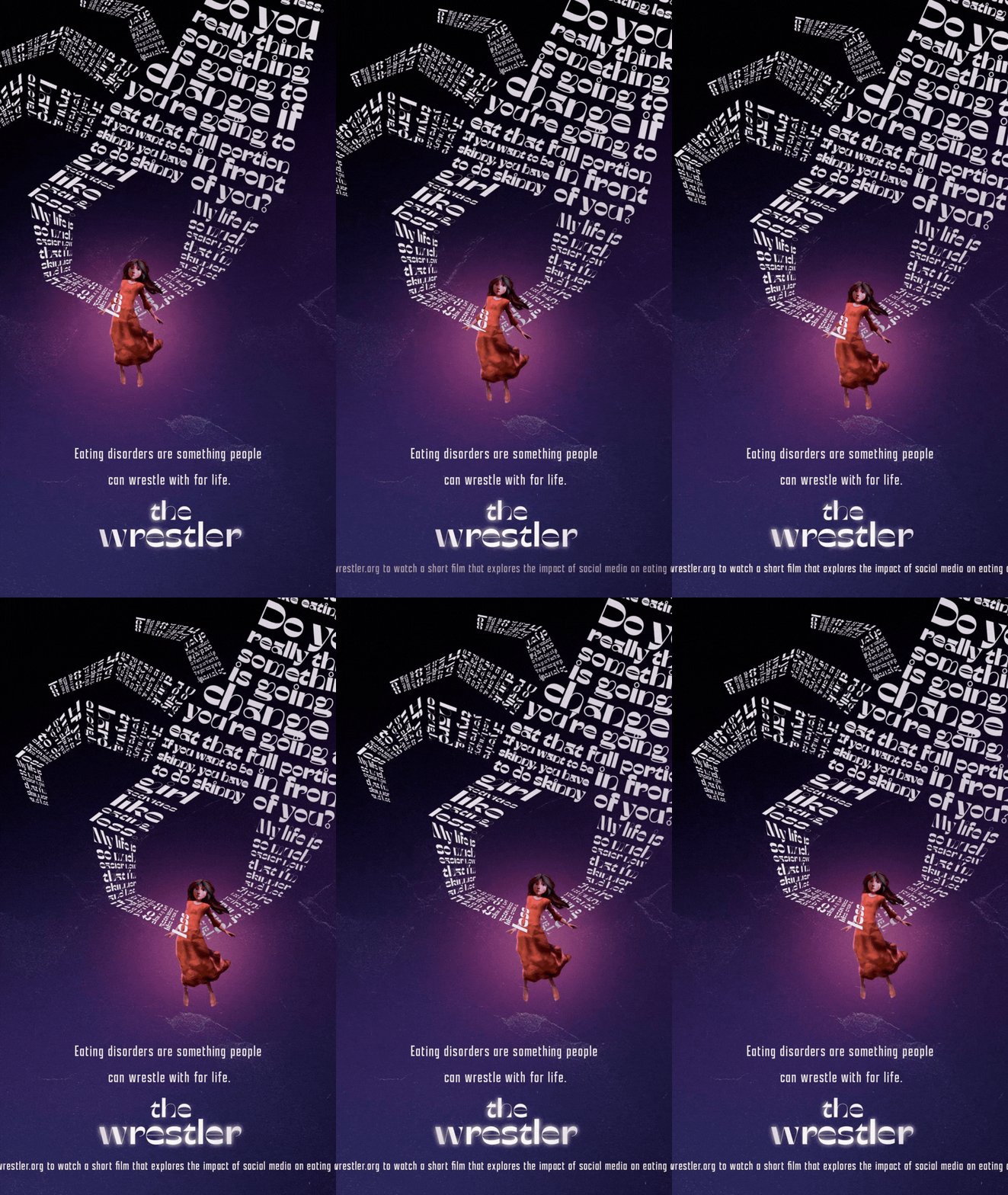
The Wrestler entered this conversation not as policy, but as proof — translating algorithmic harm into something audiences could feel.
The Wrestler premiered during Eating Disorders Awareness Week through ANAD’s national programming.
1,300+ live social viewers — more than double the previous year
Nearly 4,000 participants in live conversations
1,400+ additional website streamers
Student-led watch parties nationwide
Press coverage in Med Ad News
And engagement continues beyond the premiere — with ongoing programming and recorded viewership expanding reach.
For many viewers, the film didn’t introduce the issue. It reflected it.
the impact